The short version
- Mismatched paint, uneven panel gaps and fresh underbody paint usually mean accident repair.
- A seller who resists an independent inspection is the clearest warning sign of all.
- Damp smells, silty carpets and corroded connectors point to flood damage.
- Service gaps, worn pedals against low mileage, and warning lights cleared minutes before viewing all deserve a diagnostic scan.
A used car in Dubai can look immaculate and still hide thousands of dirhams of trouble. Heat, sand, short city trips and a fast resale market all work against the buyer. These are the ten things our inspectors flag most often, and what each one usually means.
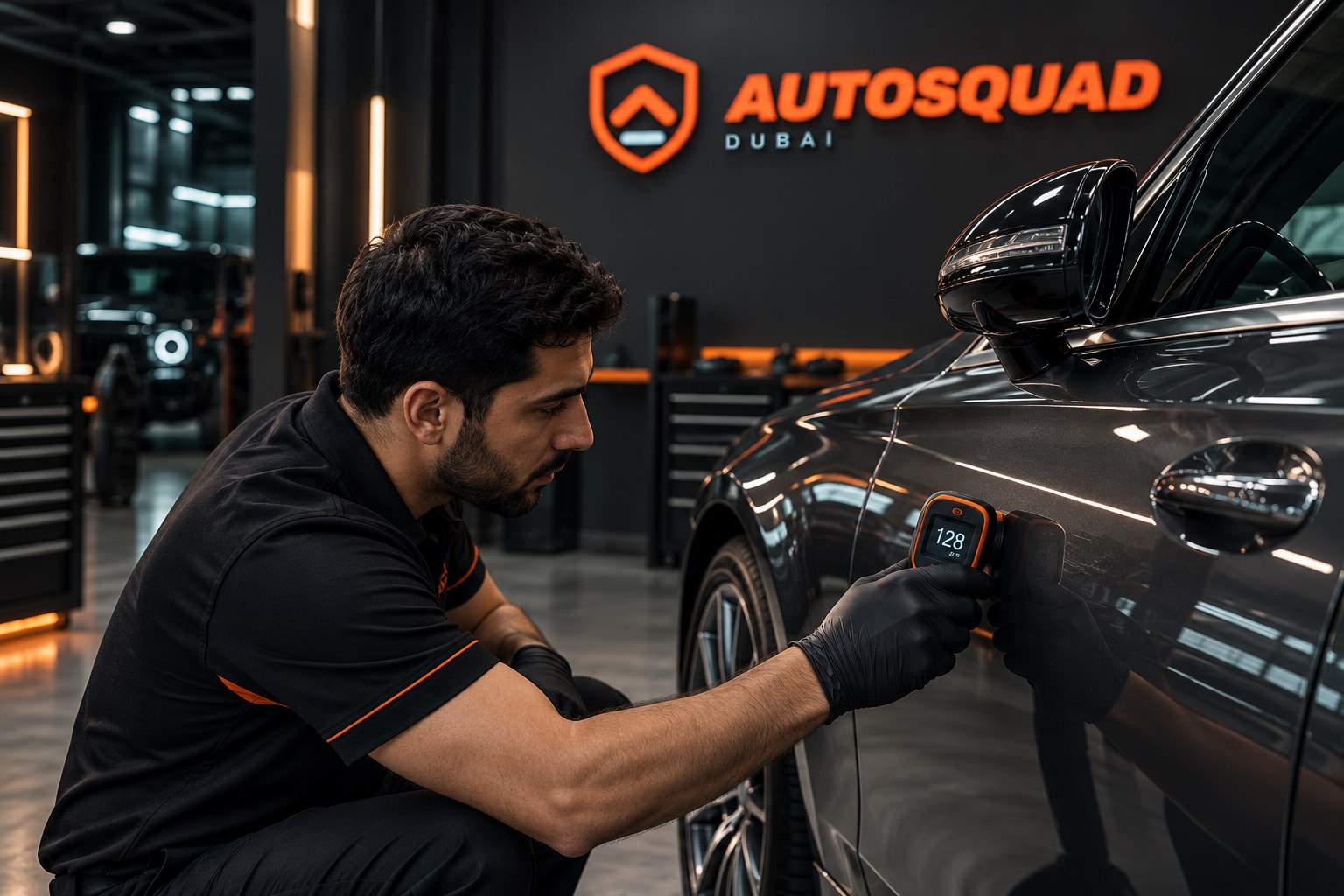
1. Mismatched paint and uneven panel gaps
Paint that looks slightly different in direct sunlight, or a door gap that is wider at one end than the other, almost always means the panel has been off the car or replaced. Factory panel gaps are consistent; bodyshop gaps rarely are. On a car that is supposedly accident-free, this is the first contradiction to resolve.
What to do: Look down the side of the car at a shallow angle in daylight. A paint-depth gauge settles it in seconds: original factory paint reads within a narrow band, and filler or a respray reads far higher.
2. A warning light that was cleared just before you arrived
Fault codes can be erased with a cheap scanner minutes before a viewing. The dashboard looks clean, but the underlying fault returns after a few driving cycles. Some sellers do this without thinking of it as dishonest.
What to do: A proper diagnostic scan shows pending and stored codes, plus how many drive cycles have passed since the last reset. A car with everything recently cleared is worth questioning.
3. The seller will not allow an independent inspection
This is the single strongest signal on the list. A seller with a sound car has nothing to lose from an hour of scrutiny — it makes the sale easier. Resistance, stalling or pressure to decide today usually means something would be found.
What to do: Treat a refusal as your answer and walk away. There are plenty of other cars, and the ones worth buying survive inspection.
4. A damp smell, or carpets that feel stiff
Flood-damaged cars reach the UAE market after heavy rain abroad, and they are often cosmetically perfect. Water leaves traces where nobody thinks to clean: under the spare wheel, inside seat rails, along seatbelt webbing pulled fully out, and in the fine silt that settles in cabin corners.
What to do: Pull the seatbelts all the way out and check for a tide mark. Lift the boot floor. Corroded connectors or rusty seat bolts on an otherwise clean car should stop the sale.
5. Service history with gaps in it
Missing records do not always mean neglect, but they remove your ability to verify anything — mileage, cambelt changes, gearbox services. In a market where cars change hands quickly, gaps are common and worth pricing in.
What to do: Ask for stamped records or workshop invoices. Where they are missing, rely on physical wear and the diagnostic scan rather than the seller's account.
6. Wear that does not match the mileage
A steering wheel worn smooth, shiny pedal rubbers or a sagging driver's seat bolster on a car showing 60,000 km is a mismatch. Odometer tampering still happens, and interior wear is harder to fake than a number on a display.
What to do: Compare the driver's seat, pedals and wheel with the odometer. If they disagree, ask for evidence that reconciles them.
7. Tyres that are old rather than worn
Tread depth is only half the story. In UAE heat, rubber hardens and cracks long before the tread runs out, and old tyres are a genuine safety risk at highway speed. Four different brands on one car also suggests cost-cutting maintenance.
What to do: Read the four-digit DOT code on the sidewall: the last two digits are the year. Anything over five years old should be budgeted for replacement.
8. Uneven brake feel or a pull under braking
A pull to one side, a pulsing pedal or a long travel before bite points to warped discs, a sticking caliper or fluid that has absorbed moisture — common on cars that sit unused in basement parking for months.
What to do: Brake firmly from a moderate speed on a clear road. Any pull, vibration or noise is worth a proper brake and suspension check before you commit.
9. Air conditioning that cools slowly
In this climate the AC is not a comfort feature, it is essential, and it is one of the more expensive systems to put right. A system that blows cold only when moving, or takes several minutes to cool, often signals a weak compressor, a leak or a tired condenser.
What to do: Start the car cold, set the AC to maximum and time how long it takes. Anything sluggish should be diagnosed before purchase, not after.
10. A price noticeably below the market
A car priced well under comparable listings is priced that way for a reason. Sometimes the reason is innocent — a quick departure from the country. Often it reflects accident history, an export title, or a fault the seller knows about.
What to do: Ask directly why it is priced as it is, then verify the answer independently. A genuine reason holds up under an inspection; an invented one does not.
The pattern behind all ten
Almost every item on this list comes down to the same thing: what the seller tells you versus what the car itself shows. Paint depth, fault codes, tyre dates and wear patterns cannot be talked around. That is the whole value of an independent check — it replaces an opinion you cannot verify with evidence you can act on.
If you are weighing up a specific car, our inspectors cover all ten of these points and around six hundred more, and you get the findings in writing the same day.